


Ford F-150 vs Ranger
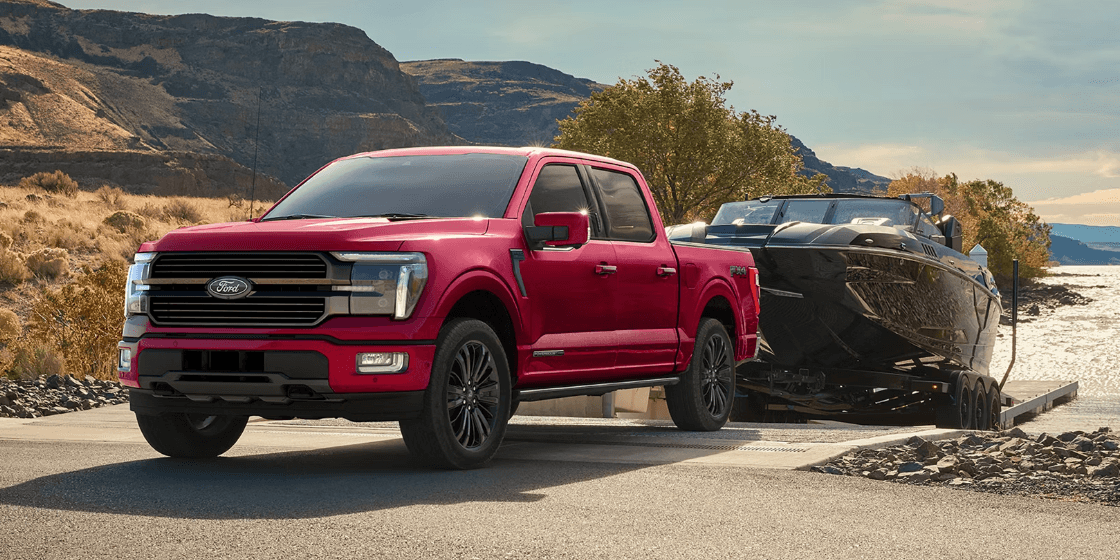
Ford’s lineup includes capable trucks for everything from daily driving to serious towing, and the F‑150 and Ranger sit at very different places on that spectrum. Choosing between them is about matching your real‑world needs with the truck that handles those demands best. At Riverside Ford, we guide families and business owners across Middle Georgia in choosing a Ford truck that matches their lifestyle and work demands.
Ford F-150 vs Ranger: Choosing the Right Ford Truck for Your Life
Picking between the Ford F-150 and Ford Ranger isn’t really about comparing two trucks. It’s more like figuring out what kind of driver you are. Both carry the Ford badge proudly, but they fit into people’s lives in completely different ways. Your decision boils down to being honest about how you’ll actually use your truck, not how you think you might use it for that one project next summer.
The F-150 vs Ranger choice is all about matching what you need to what you’ll actually do. The Ranger works for people who want efficiency and nimbleness without giving up the core benefits of truck ownership. It cruises through Macon traffic just as easily as it handles weekend projects or camping trips. The F-150 targets folks who genuinely need maximum capability: towing heavy trailers for work, hauling equipment regularly, or just wanting the space and power that comes with a full-size truck. Being realistic about your towing needs, where you park, and what your daily driving looks like will point you toward the right answer.
Size and Maneuverability Compared
Dimensions, Parking, and City Driving
The difference between the Ranger and F-150 hits you immediately when you’re trying to squeeze into tight spots. Here’s how they compare:
| Feature | 2025 Ford Ranger | 2025 Ford F-150 |
| Overall Length | 210.6 inches | 209–243.5 inches |
| Width | 79 inches | 79.9 inches |
| Height | 73.9 inches | 75–77.5 inches |
| Ground Clearance | 8.8 inches | 8.2″ (4×2), 9.8″ (4×4) |
| Max Bed Length | 5.0 feet | 8.0 feet |
Even though base models are close in overall length, the Ranger’s narrower body and tighter turning radius make it way more agile in the city. Grocery store parking, drive-throughs, older neighborhoods with narrow streets (the Ranger handles all of this easily). It feels more like driving a big sedan than wrestling with a full-size pickup. The F-150 needs more attention in these situations. If you’re regularly navigating downtown Macon or dealing with crowded parking lots, the size difference affects your daily life more than most people realize when they’re shopping.
The F-150’s bigger footprint does come with benefits beyond just raw capability. The extended cab gives passengers noticeably more shoulder room, and those larger dimensions create a more stable, planted feel at highway speeds. You can actually fit three adults across the back seat of an F-150 SuperCrew comfortably. The Ranger’s rear seat works better for two adults or kids.
Bed Size and Cargo Space
Bed configurations really tell the story in this comparison. The Ranger comes with a standard five-foot bed or you can get a six-foot bed, which gives you enough space for most recreational gear, materials for home projects, or typical hauling tasks. A stack of plywood lies flat in the longer bed, and the dimensions work for most outdoor equipment without problems.
The F-150 opens up way more bed options with 5.5-foot, 6.5-foot, and eight-foot configurations. That eight-foot bed becomes crucial for contractors, landscapers, or anyone who regularly hauls full sheets of drywall or lumber. Bed volume differs substantially too: F-150 beds hold between 52.8 and 77.4 cubic feet depending on length, while Ranger beds max out around 54 cubic feet. This capacity difference matters when you’re hauling mulch, gravel, or anything measured by volume rather than length.
Towing and Hauling Capabilities
Towing Capacity for Boats, Campers, and Trailers
The towing capacity comparison shows the biggest capability gap between these trucks:
| Feature | 2025 Ford Ranger | 2025 Ford F-150 |
| Max Towing Capacity | 7,500 lbs | 13,500 lbs |
| Max Payload Capacity | 1,805 lbs | 2,440 lbs |
| Max Torque | 400 lb-ft | 640 lb-ft |
The Ranger delivers solid numbers for its class. Properly equipped models tow up to 7,500 pounds, which handles most boat and trailer combinations, lightweight travel trailers, and dual-axle utility trailers loaded with equipment or ATVs. For recreational towing and light commercial use, the Ranger gives you enough capability without the bulk of a full-size truck.
The F-150 plays in a completely different league, with maximum towing ratings hitting 13,500 pounds on properly equipped models. This opens up larger fifth-wheel campers, heavier boat and trailer combinations perfect for Lake Sinclair weekends, and serious commercial hauling applications. If you think you might upgrade to a larger camper or boat in the next few years, factor that growth into your decision. Starting with an F-150 gives you room for these changes.
Towing experience goes beyond just the numbers. The F-150’s extra weight and power create more stable towing at highway speeds on I-75, especially in crosswinds or when passing big vehicles. The Ranger tows confidently within its ratings but requires more attention when you’re approaching its limits.
Compare F-150 and Ranger models available today to see which fits your towing and hauling needs.
Payload and Work-Ready Hauling
Payload capacity separates work trucks from recreational vehicles. The Ranger offers payload ratings up to 1,805 pounds, which works for most personal use and light commercial applications. This handles a pallet of pavers, a load of topsoil, or construction materials for typical home improvement projects. Small business owners running landscape services or light construction find the Ranger handles daily tasks while delivering better fuel economy.
The F-150 pushes payload ratings up to 2,440 pounds on properly equipped models. This jump accommodates serious commercial use, from contractor cargo to agricultural applications. The higher rating means F-150 owners work well below their truck’s limits during normal hauling tasks, reducing wear on suspension components and providing margin for occasionally exceeding estimated load weights.
Fuel Economy and Cost of Ownership
| Feature | 2025 Ford Ranger | 2025 Ford F-150 |
| EPA MPG (City/Hwy/Comb) | 21/26/23 | 19/25/21 |
| Engine Options | 3 | 6 |
The Ranger typically delivers fuel economy around 21/26/23 MPG for city/highway/combined driving. These numbers make the Ranger practical for daily commuting, cutting fuel costs significantly over time for drivers covering substantial miles between fill-ups. A commuter driving 15,000 miles annually might save several hundred dollars in fuel costs compared to most F-150 configurations.
The F-150 accepts reduced fuel economy as the trade-off for increased capability. Most models fall into the 19/25/21 MPG range, though the PowerBoost hybrid option narrows the gap considerably, delivering fuel economy that approaches Ranger territory while keeping F-150 capability. This hybrid technology makes sense for buyers who need full-size truck features but want to minimize fuel expenses, particularly if you do significant city driving where the hybrid system provides maximum benefit.
Total cost of ownership goes beyond fuel. The initial price comparison typically favors the Ranger by several thousand dollars at comparable trim levels. Lower initial cost, reduced insurance premiums, and potentially lower maintenance costs over time add to the Ranger’s ownership value for buyers who don’t require F-150 capability. The F-150 holds resale value exceptionally well, though, and its popularity ensures strong demand in used markets.
Interior Comfort, Technology, and Family Features
| Feature | 2025 Ford Ranger | 2025 Ford F-150 |
| Seating Capacity | 5 | Up to 6 |
| Key Tech | SYNC 4, off-road controls | Pro Power Onboard, BlueCruise, Ford Co-Pilot360 |
Interior space transforms the daily driving experience beyond just numbers on paper. The F-150 provides genuinely spacious accommodations, with rear seats that offer real comfort for adult passengers on longer trips. Families with teenagers or those who regularly carry adult passengers appreciate the extra room. The wider cabin allows three passengers to sit comfortably without constantly bumping shoulders.
The Ranger delivers a more intimate cabin experience. Front seat occupants get plenty of space and comfort, with supportive seats and good visibility. The rear seat works well for shorter trips or smaller passengers but feels tight on extended journeys with multiple adults. Families with young children find the space adequate. Those with older kids or frequent adult passengers might feel cramped on longer drives.
Technology features have converged across Ford’s truck lineup in recent years. Both Rangers and F-150s offer SYNC 4 infotainment with smartphone integration, though screen sizes and feature availability vary by trim level. The F-150 generally provides more standard technology at lower trim levels and offers more advanced options at the top end. Features like Ford Co-Pilot360, BlueCruise, and Pro Power Onboard appear across both model lines but become standard earlier in the F-150 range.
Off-Road Performance and Weekend Adventure Readiness
Off-road capability varies dramatically within both model lines depending on which trim you select. The Ranger shows impressive agility on trails, with its shorter wheelbase and narrower track making it easier to navigate tight switchbacks and narrow forest roads. The truck’s size advantage becomes apparent when squeezing between trees or maneuvering on technical terrain where precision matters more than brute force.
The F-150 brings different strengths to off-road adventures. Models equipped with off-road packages provide excellent capability across various terrain types, with powerful engines making light work of steep grades and deep sand. The Raptor variant takes off-road performance to another level entirely, with sophisticated suspension, massive tires, and engineering specifically aimed at high-speed desert running and serious trail work.
Most buyers overestimate their off-road needs. Weekend trips to the lake, occasional gravel roads, or driving across fields for outdoor activities don’t require extreme off-road capability. Both trucks handle these scenarios easily in their standard configurations. Serious off-road enthusiasts who regularly tackle difficult trails, participate in off-road events, or explore remote areas should carefully evaluate their specific requirements.
Which Ford Truck Fits Your Lifestyle?
The Ranger: Ideal for Daily Driving and Light Towing
The Ford Ranger is your best choice if your daily driving mostly takes place in urban or suburban environments where parking and maneuverability matter. It excels as a practical daily driver that feels like a truck first, rather than a work truck that reluctantly handles commuting duties. Fuel efficiency is a real advantage for buyers covering significant miles, and the lower purchase price makes it appealing for those who want the benefits of a truck without paying for full-size capability they won’t fully use.
The Ranger is ideal for drivers whose towing needs stay comfortably under 7,000 pounds and whose hauling typically involves weekend projects rather than daily commercial work. Small business owners handling light commercial tasks, as well as outdoor enthusiasts who value agility over raw power, will find the Ranger fits seamlessly into both work and recreational lifestyles.
F-150 Fit: Towing, Hauling, and Full-Size Performance
The Ford F-150 is designed for buyers whose work or recreation demands serious capability. It’s a truck for those who regularly push limits, whether towing large trailers, hauling heavy loads, or transporting crews and equipment for commercial operations. Its maximum towing and payload ratings aren’t just numbers on a sheet, they’re practical necessities for F-150 owners who need true capability.
Choose the F-150 if you often tow over 7,500 pounds, require spacious interiors alongside bed capacity, anticipate growth in hauling requirements, or simply prefer having extra capability rather than operating near the truck’s limits. For those who need a vehicle that serves as both a dependable workhorse and a comfortable family hauler, the F-150 delivers unmatched versatility and confidence on every drive.
Find Your Perfect Ford Truck at Riverside Ford
We’ve served Middle Georgia’s truck buyers for over 56 years at Riverside Ford, helping customers navigate these decisions with practical insight. Visit us at 2089 Riverside Dr off I-75 in Macon to compare both models directly, experiencing how the F-150 vs Ranger choice translates from specifications to real-world usability. Our pressure-free environment allows thoughtful consideration of how each truck fits your specific needs, serving Warner Robins, Byron, Forsyth, and Milledgeville drivers.
Contact our team at 478-464-2900 for personalized guidance. We’ll help you compare models, understand their capabilities, and find the truck that works best for your lifestyle with confidence.
0 comment(s) so far on Ford F-150 vs Ranger